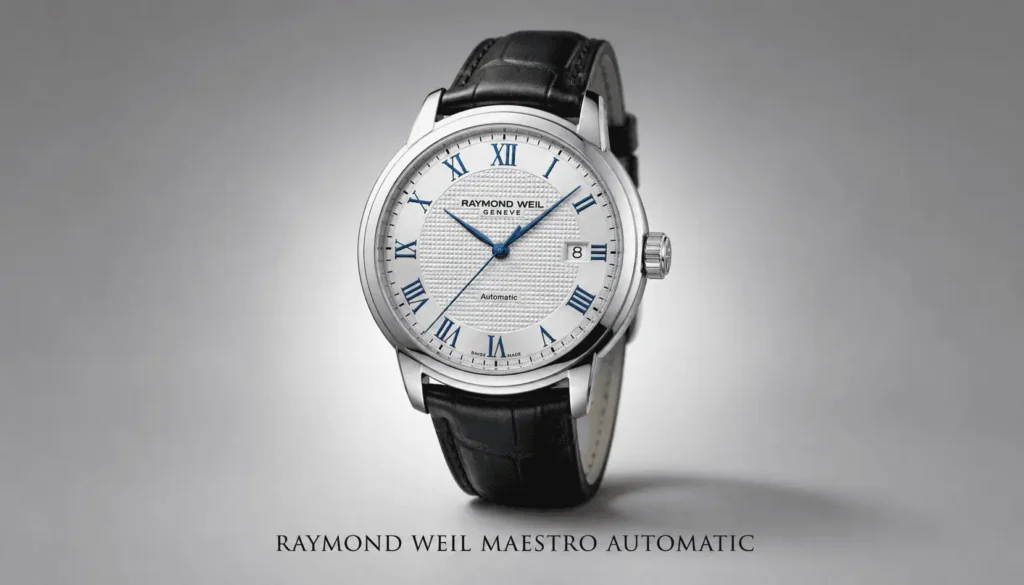
The Raymond Weil Maestro Automatic approaches watch design like a carefully arranged piece of music. Instead of filling the dial with unnecessary complications, it uses texture, proportion, and a small-seconds display to create visual rhythm.
This review focuses on the Maestro 2238 family introduced with gray, green, and blue gradient dial variations. Because availability can differ between retailers and regions, buyers should confirm the exact reference before ordering.
Opening Movement: What “Maestro” Represents
The word “maestro” refers to a master or accomplished conductor. Raymond Weil uses the name to connect traditional Swiss watchmaking with the company’s long-standing inspiration from music and the arts.
The Maestro 2238 places a small-seconds display at 6 o’clock, creating a visual counterpoint to the central hour and minute hands. A date window beside the crown provides practical information without turning the dial into a complicated calendar.
Quick impression: The Maestro is designed for someone who wants a traditional automatic watch with more visual detail than a minimalist dress model.
The Watch as a Composition
The Case Sets the Tempo
The stainless-steel case measures 39.5 mm, a size intended to suit a broad range of wrists. It feels more traditional than a large contemporary sports watch while still having enough presence for modern clothing.
Its round shape and polished character support formal and business-casual wear. The dimensions also allow the dial textures to remain visible without requiring an oversized case.
The Dial Provides the Melody
The gray edition uses a smoked gradient that transitions from a lighter center to a darker outer edge. A spiral-style central texture, decorated hour track, and clearly marked minute scale create several layers without sacrificing readability.
Blue and green versions apply the same overall concept in more expressive colors. These alternatives allow buyers to choose between reserved, cool, or slightly adventurous styling.
Small Seconds Add Rhythm
Moving the seconds hand into a separate subdial changes the personality of the watch. Instead of a long central hand crossing the entire face, the motion is concentrated at 6 o’clock.
This arrangement creates a more classical appearance and gives the wearer another detail to appreciate at close range.
Backstage: The Automatic Movement
The Maestro 2238 uses Raymond Weil’s RW4250 Swiss automatic movement. A sapphire case-back window reveals the movement and allows the owner to observe its automatic winding system.
Automatic operation means normal wrist movement helps maintain the watch’s stored energy. Like other mechanical watches, it may require resetting after remaining unworn and will not normally equal the precision of a quartz movement.
Performance Program
| Element | Maestro 2238 |
|---|---|
| Case | 39.5 mm stainless steel |
| Movement | RW4250 automatic |
| Main display | Central hours and minutes |
| Secondary display | Small seconds at 6 o’clock |
| Calendar | Date window near 3 o’clock |
| Case back | Sapphire exhibition window |
| Strap | Calf leather with alligator embossing |
| Clasp | Folding clasp with double-security pushers |
| Dial options | Gray, green, or blue gradient |
Raymond Weil pairs the watch with a color-coordinated calf-leather strap featuring an alligator-style embossed pattern. Its folding clasp uses double-security pushers, combining a formal appearance with a more secure fastening system.
When the Maestro Sounds Best
The watch works particularly well for:
- Business meetings and professional settings
- Weddings and formal celebrations
- Dinner dates and evening events
- Smart-casual office wardrobes
- Collectors who enjoy textured dials
- Buyers seeking an alternative to larger luxury brands
It is less naturally suited to swimming, intense exercise, construction work, or outdoor environments where leather and polished surfaces could experience unnecessary wear.
Pros and Cons
The High Notes
- Balanced 39.5 mm case
- Swiss automatic movement
- Elegant small-seconds display
- Attractive gradient dial options
- Sapphire exhibition case back
- Practical date complication
- Secure folding clasp
- Distinctive music-inspired identity
The Quieter Notes
- Leather is not ideal for wet conditions
- The layered dial may feel busy to minimalists
- Availability may vary by exact reference
- Polished surfaces can show small marks
- Mechanical timekeeping requires occasional adjustment
- The formal personality limits rugged versatility
Who Is This Watch Conducting For?
The Maestro Automatic is suited to buyers who want their first refined Swiss watch to feel traditional without looking generic. The small-seconds layout and gradient dial provide enough personality to separate it from plain three-hand dress watches.
It may also appeal to established collectors seeking an elegant alternative from an independent family-connected Swiss brand. Buyers needing a single watch for sports, water, and formal events should consider a more versatile steel-bracelet model.
Final Note
The Raymond Weil Maestro Automatic succeeds through harmony rather than spectacle. Its 39.5 mm case, textured dial, small-seconds display, date window, and visible automatic movement work together like coordinated parts of a composition.
Its strengths appear most clearly at close range. For buyers who appreciate subtle finishing, musical inspiration, and classical Swiss styling, the Maestro offers a sophisticated experience without relying on excessive complications.